Know All About Iron Deficiency in Women – Learn About Symptoms, Foods & Recovery Tips | Dietician Ashu Gupta
By Dietician Ashu Gupta – Best Dietician for Women’s Health and Nutrition
Iron Deficiency is one of the most common health problems facing women today. It affects energy, emotions, and overall health, although most women are unaware of their iron deficiency until the symptoms increase.
As a top women's health dietician in Gurgaon, I regularly meet people who are exhausted, weak, or suffering from hairloss due to iron deficiency. This post will explain everything you need to know about iron deficiency in women.
Symptoms, causes, iron-rich foods, and natural ways to boost hemoglobin with a balanced diet and lifestyle.
What Is Iron Deficiency?
Iron deficiency occurs when the body does not have enough iron to produce hemoglobin. This is a protein in red blood cells that transports oxygen all over the body. Without adequate hemoglobin, tissues and muscles do not receive enough oxygen, causing weariness and weakness. Iron deficiency can range from mild to severe and can result in iron deficiency anemia, which affects millions of women worldwide.
Why Is Iron Deficiency Common in Women?
Women are more prone to iron deficiency than men due to a variety of biological and lifestyle reasons:
Menstrual Blood Loss: women lose a little amount of blood each month During menstruation, which cause their iron levels to gradually drop.
Pregnancy and Breastfeeding: During pregnancy and breastfeeding, the body produces more blood for both the mother and the baby, which increases iron requirements rapidly.
Poor Diet Options: Many women avoid iron-rich foods or adopt restricted diets to lose weight, which reduces their iron intake.
Digestive problems: Celiac disease and intestinal inflammation can stop iron absorption.

Symptoms of Iron Deficiency in Women
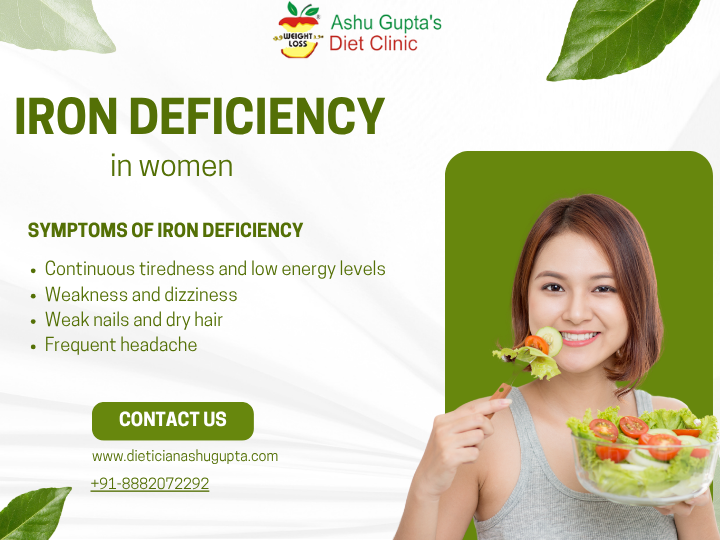
Iron deficiency develops gradually, and its symptoms are frequently mistaken for fatigue or stress. Some common symptoms are:
- Continuous tiredness and low energy levels
- Pale skin, poor complexion.
- Shortness of breath.
- Weakness and dizziness.
- Weak nails and dry hair.
- Cold hands and feet
- Poor concentration.
- An irregular heartbeat
- Frequent headaches.
If you are facing any of these symptoms, you should visit a good dietician like Dietician Ashu Gupta to get a iron rich diet plan to help you recover naturally.
Complications of Iron Deficiency
Ignoring iron deficiency can result in long-term consequences like:
Anemia is caused by a lack of red blood cells, which causes extreme tiredness and weakness.
Poor immunity makes the body more prone to illnesses.
Hair Loss and Dull Skin: A lack of iron lowers blood flow to the hair follicles and skin.
Pregnancy Complications: Low iron levels can raise the risk of preterm delivery or low birth weight.
How Much Iron Do Women Need Daily?
• Women (19–50 years): 18 mg per day
• Pregnant women: 27 mg per day
• Breastfeeding women: 9–10 mg per day
• Postmenopausal women: 8 mg per day
Iron-Rich Foods for Women
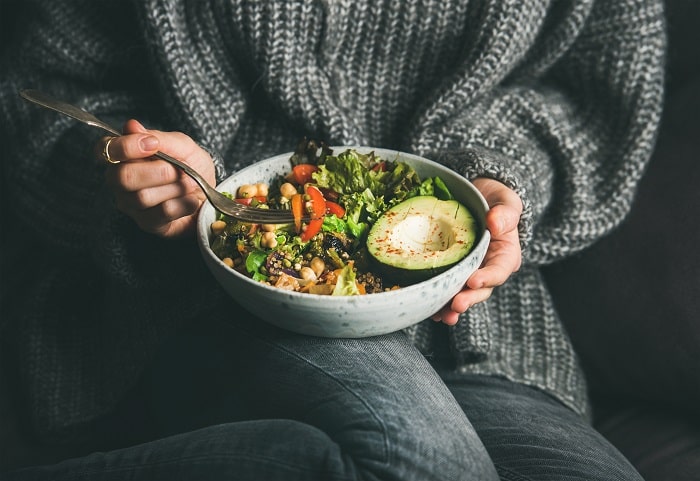
Including iron-rich foods in your regular diet is the most effective way to naturally manage iron deficiency and boost hemoglobin levels. These are the best options:
1. Green Leafy Vegetables: Spinach, kale, moringa leaves, and fenugreek (methi) are excellent sources of non-heme iron. They also contain vitamin C, which promotes iron absorption.
2. Legumes and Pulses: Lentils, chickpeas, kidney beans, and soybeans are all good plant sources of iron. They're also high in protein and fiber.
3. Whole Grains: Brown rice, quinoa, oats, and millets such as ragi and bajra are excellent iron sources. They also promote digestion and energy balance.
4. Nuts and Seeds: Pumpkin seeds, flaxseeds, sesame seeds, and almonds have high levels of iron and magnesium. Including a few handful daily can make a significant effect.
5. Fruits: Pomegranates, apples, watermelon, and dates all help to naturally boost hemoglobin levels. Citrus fruits such as oranges and amla (Indian gooseberry) help to absorb dietary iron.
6. Fortified Foods: Many cereals and flours are now fortified with iron. Check labels while buying to include them in your diet.
How to Improve Hemoglobin Level Naturally
This is not neccessary to use supplements to increase your hemoglobin levels. You can naturally increase your iron levels by following these simple dietary and lifestyle tips:
1. Eat Vitamin C-Rich Foods: Vitamin C helps your body in collecting non-heme iron from plant-based sources. Mix spinach or dal with lemon, orange, guava, or tomato.
2. Avoid Tea and Coffee After Meals: Both tea and coffee include chemicals that prevent iron absorption. Try to consume them at least an hour after your meal.
3. Cook in Iron Utensils: Cooking with iron cookware might modestly boost the iron content of your meals.
4. Add Beetroot and Carrot Juice: These vegetables are high in iron and antioxidants. A daily glass of fresh beetroot and carrot juice can naturally boost hemoglobin levels.
5. Include Dates and Jaggery: These Both are classic sources of iron and produce excellent natural sweeteners. Eat just a little after lunch to enhance your energy.
6. Stay Active: Regular exercise increases blood circulation and the oxygen-carrying capacity of your red blood cells.
Foods to Avoid When You Have Low Iron
Some foods can stop or slow iron absorption. Try to avoid them:
- Tea and coffee just after meals.
- Processed foods rich in sugar and fat
- Carbonated drinks
- Refined carbohydrates and junk foods
Instead of these items, focus on fresh, natural, and handmade meals that help your body create red blood cells efficiently.
Conclusion – All about iron deficiency in women
Iron is a important mineral for women's health, and a lack of it can have a negative impact on your energy, mood, and daily life. With the appropriate diet, lifestyle changes, and professional advice, you can easily overcome from this problem.
If you're feeling tired, pale, or weak, it's time to check your iron levels and start your recovery journey with Dietician Ashu Gupta, the top dietician for women's health and weight management in Gurgaon and Delhi NCR.
Consult Dt. Ashu Gupta for weight loss. For an appointment, you can contact us via call, WhatsApp and through the website.
.jpg)