10 Foods That Can Help Boost Platelets Naturally
Platelets are small blood cells that assist in the clotting process and prevent hemorrhaging. When the count of platelets is below the required level, it is referred to as thrombocytopenia. The causes of low platelet counts include viral infections, malnutrition, certain drugs, autoimmune disorders, and other medical issues.
There are people who try to find foods that boost platelets naturally. While it is true that proper nutrition helps produce healthy blood cells, there is not a food item that could increase their number efficiently and rapidly. It all depends on the cause of the condition. In today’s blog, we’ll discuss 10 nutrient-rich foods that promote healthy blood cell production and share some important tips regarding diet in cases of low platelets.
What Is a Normal Number of Platelets?
In most adults, a normal number of platelets is about 150,000 to 450,000 platelets per microliter of blood. The range might differ a bit from one laboratory to another. Having a smaller number does not mean that you will have symptoms, although the chances of bleeding become higher as the platelet number becomes lower.
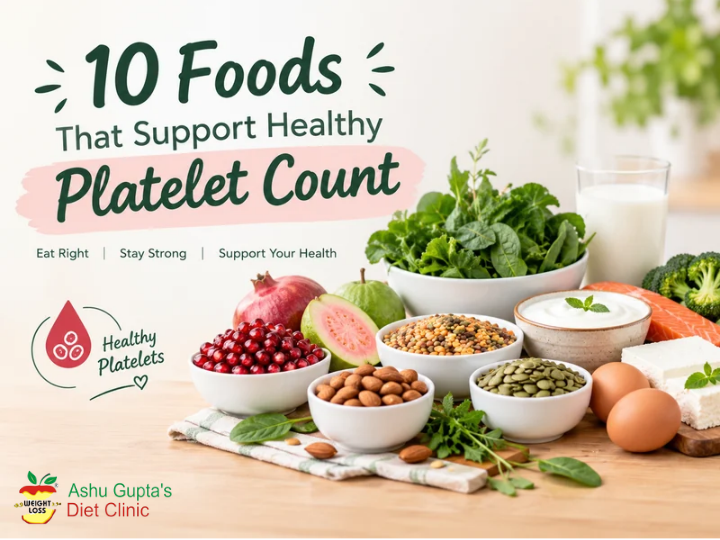
10 Foods That Help Support a Healthy Platelet Count
1. Fruits Containing Vitamin C
Vitamin C is responsible for keeping our immune system working normally, and it also helps the body to absorb iron from plant-based sources. Incorporating fruits with high vitamin C content can keep you healthy nutritionally.
Foods to eat:
- Guavas
- Amla
- Oranges and sweet lime
- Kiwi
- Strawberries
- Papaya
A few portions of any of these fruits can be included in breakfast or as a mid-morning snack. But fruits containing vitamin C are not proven to cure platelet deficiency.
2. Green Leafy Vegetables
Green leafy vegetables contain folate, which plays a vital role in the formation of our blood cells. If there is any deficiency in folate, then blood cell formation gets affected.
The best choices are:
- Spinach
- Fenugreek leaves
- Amaranth leaves
- Broccoli
- Some other seasonal green vegetables
Cooked leafy vegetables can be consumed in the lunch or dinner meals along with dal and roti.
3. Lentils, Dal, and Beans
Legumes such as lentils, and dal are rich sources of folate, proteins, and iron. They are useful to meet the body’s normal nutrient requirements.
These include:
- Moong dal
- Masoor dal
- Chickpeas
- Rajma
- Black-eyed peas
- Beans and other pulses
The consumption of dal with vegetables and whole wheat roti is an example of how one can consume these nutrients on the Indian diet.
4. Vitamin B12 Sources
Vitamin B12 is important for the creation of normal blood cells. A deficiency leads to abnormalities in blood cell creation and can at times lead to a low platelet count.
Some foods that contain vitamin B12 include:
- Milk
- Yogurt
- Paneer
- Eggs
- Fish
- Meat
- Vitamin B12 fortified foods
Vegetarian and vegan people need to be especially careful about their B12 intake. Supplements need to be consumed as per medical guidance.
5. Nuts and Seeds
The nuts and seeds contain proteins, good fats, and various minerals, which make them important for a well-balanced diet.
Take some amounts of:
- Almonds
- Cashews
- Pumpkin seeds
- Sesame seeds
- Sunflower seeds
- Walnuts
A little number of these foods may be included in your breakfast or eaten as snacks. The nuts and seeds are good for general nutrition and do not help directly to boost platelets.
6. Papaya
Papaya provides such nutrients as vitamin C and fibre. It may be included into a healthy diet if there are no contraindications. Nevertheless, there is no proof that the consumption of papaya fruit can definitely increase the platelet levels. There are also differences between the fruit itself and papaya leaf juice and extracts. They are ineffective and their use is unsafe.
7. Pomegranate
Pomegranate is rich in antioxidants and other compounds found in plants. The seeds of pomegranate can be consumed raw, and pomegranate can be used in salads or as an ingredient in various meals. Despite being nutritious, there is not enough proof of its direct ability to increase the number of platelets. It can be consumed as a part of the varied nutrition, but it is not meant to be a remedy.
8. Protein-Rich Foods (Fishes, Eggs and Lean Meats)
Protein-rich foods are sources of protein, vitamin B12 and sometimes iron. All these nutrients are responsible for providing normal functions of the body and proper development of blood cells.
Good choices are:
- Eggs
- Fishes
- Lean chicken
- And other lean meats (in case you eat them)
Remember to prepare food properly.
9. Whole Grains and Fortified Cereals
Whole grains are a good source of energy, fiber, and many nutrients. Some fortified cereals also include iron, folate, and vitamin B12.
Some choices are:
- Oats
- Whole-wheat roti
- Whole grain bread
- Fortified breakfast cereals
- Other types of whole grains
Check the nutrient content on the label of fortified products as this varies from one brand to another.
10. Soybeans and Tofu
Soybeans, tofu, and other soy products are useful plant protein sources that can be included in the diet of vegetarians and vegans. Tofu can be added to vegetables and cooked in dishes while soybeans can be added to meals or combined with other foods.
Which Nutrients Are Important for Blood Cell Production?
Folate – Folate aids the body in producing healthy blood cells. Foods rich in folate are dark green vegetables, lentils, chickpeas, and enriched grains.
Vitamin B12 – Vitamin B12 is responsible for ensuring that the formation of blood cells is normal. Foods high in vitamin B12 include dairy products, eggs, fish, meat, and enriched foods.
Iron – Iron is essential in the production of haemoglobin. Sources of iron include legumes, dark green vegetables, seeds, meat, and enriched iron sources. Iron deficiency is not responsible for all cases of low platelets; therefore, taking supplements is only necessary where required.
Protein – Protein aids in body growth, tissue repair, and the functioning of body systems. Foods high in protein are dal, beans, dairy products, eggs, tofu, fish, and lean meat.
These nutrients are essential for good overall health, but increasing their intake will not necessarily increase platelet levels when the cause of low platelets is a medical issue.
Is There a Way to Naturally Raise Platelets in One Day?
It’s impossible to raise platelet levels through food consumption within one day. It all depends on why the person has a low level of platelets and how severe their problem is, and if any therapy is necessary. In case the deficiency is caused by malnutrition, it can be solved. However, if the problem is caused by dengue, other infection, some medicine, or autoimmune problem, it is recommended to see a doctor. Don’t postpone your blood test and consultation with the doctor while trying home treatment.
Commonly Asked Questions
1. What kind of foods raise platelet counts?
Foods high in folate, vitamin B12, iron, and protein help maintain normal production of blood cells. They include green vegetables, lentils, dairy products, eggs, beans, and appropriate fortified foods. There are no foods that could quickly increase your platelet levels.
2. Will consuming papaya raise my platelet count?
Papaya is a nutrient-rich fruit, but there is no evidence that papaya consumption would increase platelet count. Papaya leaf preparations are not equal to fruits and cannot be consumed without consulting a doctor.
3. Is pomegranate good for low platelets?
Pomegranate is a healthy fruit that you could include in your diet. But it does not have proven effectiveness against thrombocytopenia.
4. Can vitamin B12 deficiency cause low platelets?
Yes. Vitamin B12 deficiency affects blood cells production and leads to low platelet count.
5. What can I eat for my low platelets because of dengue?
Do what your doctor tells you about your water and food intake and checking platelets. Eat those foods and drink those liquids that suit you, but don’t rely on anything specific to raise your platelets.
6. Should I take iron or vitamin supplements to increase platelets?
Only when a professional finds a deficiency or suggests supplementation. These won’t treat all causes of low platelets and will be damaging if taken inappropriately.
Conclusion
A healthy diet comprising green vegetables, lentils, B12 vitamins, protein, whole grains, nuts and fruits will aid in good formation of blood cells and health. But the most efficient way to deal with your low platelets will be to find out its cause.
If you need nutritional guidance By Best Dietician in Gurgaon, Dietician Ashu Gupta can design balanced meals for you depending upon your requirements along with other treatments suggested by your doctors.