PCOS to PMOS – Understanding the New Name Change in Women’s Health
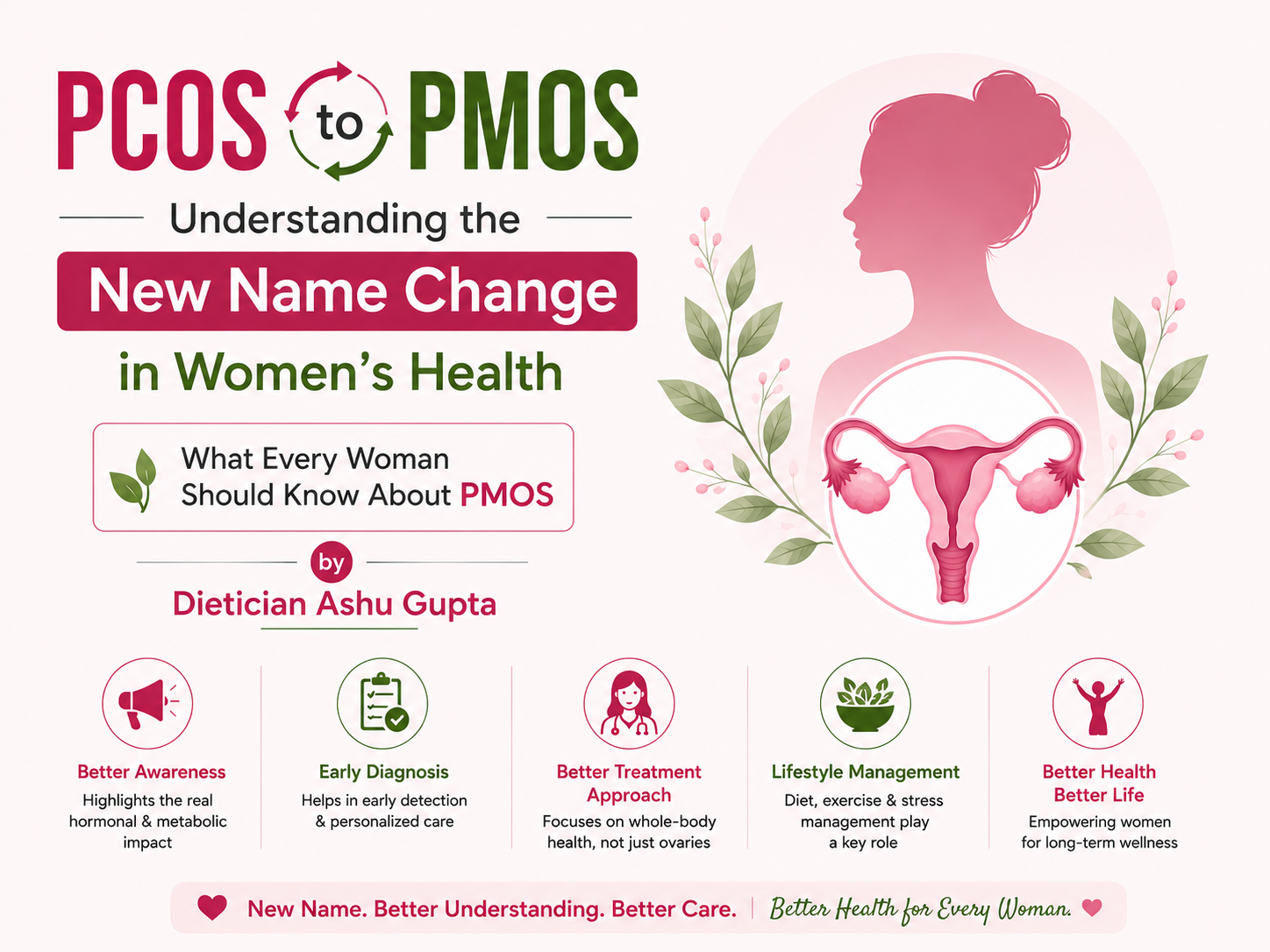
PCOS (Polycystic Ovary Syndrome) has long been a common term for a hormone-related ailment that affects many women all around the world. But medical professionals are trying to make an effort to change the name of this ailment from PCOS to PMOS (Polyendocrine Metabolic Ovarian Syndrome).
It is more than just a simple change in the name. It is a representation of increased awareness and the fact that PCOS is not only the presence of ovarian cysts. The new term, PMOS, emphasizes the significance of this ailment in terms of hormones and metabolism of women.
As per Dietitian Ashu Gupta, it is important for women to become aware and maintain proper lifestyles to naturally control their PCOS/PMOS symptoms.
What is PCOS
PCOS is a hormonal disorder that affects women, especially during reproductive years.
Common symptoms include:
• Irregular periods
• Weight gain
• Acne
• Hair fall
• Excess facial hair
• Difficulty losing weight
• Fertility issues
Many women with PCOS also struggle with insulin resistance and metabolic health problems.
Why Has PCOS Been Re-named As PMOS
Doctors say that the name PCOS does not define all the symptoms of the syndrome. A majority of patients that have been diagnosed with PCOS may lack ovarian cysts. This leads to misunderstandings and delays in treating the problem.
With the new term PMOS (Polyendocrine Metabolic Ovarian Syndrome), one can more easily see that the disorder relates to:
- Imbalance of hormones
- Metabolic dysfunctions
- Insulin resistance
Health consequences throughout the body
- PMOS stands for
- Polycystic
This condition affects several hormones in the body.
Metabolic – This condition affects metabolism, weight loss, and insulin resistance.
Ovarian Syndrome – It continues to affect the ovaries and menstruation periods. With this new term, there is more clarity about women’s health conditions.
This is Why this New Name is Significant
PMOS could prove to be effective in:
- Raising awareness
- Diagnosis at an early stage
- Effective treatment strategy
- Symptoms identification
- Management of lifestyle
Most of the women neglect the symptoms since they believe PCOS to be synonymous with ovarian cysts.
However, PMOS brings into light the fact that it affects:
- Weight issues
- Hormonal imbalances
- Mental well-being
- Skin problems
- Hair disorders
- Infertility
- Digestion
- Metabolism
Common Symptoms of PMOS
Women with PMOS may experience:
• Irregular periods
• Weight gain
• Difficulty losing weight
• Acne and oily skin
• Hair thinning
• Mood swings
• Fatigue
• Cravings
• Belly fat
Main Causes of PMOS
Hormonal Imbalance – Hormonal imbalance causes irregular periods and affects metabolism.
Insulin Resistance – Body becomes resistant to insulin, resulting in weight gain and cravings.
Lifestyle Problems – Unhealthy diet, stress, lack of physical activity, and insomnia may contribute to PMOS.
Hormonal Imbalance – Hormonal imbalance causes irregular periods and affects metabolism.
Insulin Resistance – Body becomes resistant to insulin, resulting in weight gain and cravings.
Lifestyle Problems – Unhealthy diet, stress, lack of physical activity, and insomnia may contribute to PMOS.
Genetics – Familial predisposition may cause development of PMOS.
Role of Dietician Ashu Gupta in PMOS Treatment
Not all women react the same way when faced with hormonal imbalance, therefore, general diet plans available on the Internet might not be suitable for PMOS patients. Dietician Ashu Gupta, who is said to be one of the best dieticians in Gurgaon, provides customized plans to women facing problems with PCOS/PMOS, obesity, insulin resistance, and hormonal imbalance.
The diet plans are based on:
- Achieving hormonal balance via healthy nutrition
- Weight loss
- Healthy, natural food
- Changes in lifestyle
- Improvement in general well-being
With the help of her diet plans, many women were able to improve their energy level, menstruation, metabolism, and self-confidence.
FAQ’s – PCOS to PMOS
Why is PCOS getting redefined as PMOS?
It gives more understanding about its hormonal and metabolic nature.
Is PMOS the same as PCOS?
No, it is mostly just another name for PCOS.
Can PMOS result in weight gain?
Yes, due to hormonal imbalance and insulin resistance, weight gain may occur.
Does diet affect PMOS?
Yes, proper diet plays a vital role in treating it.
Is PMOS curable?
PMOS cannot be cured, but symptoms can be controlled by making some lifestyle changes.
Are there chances that women having PMOS should visit a dietician?
Yes, it plays an important role in balancing hormones and weight management.
Conclusion
The shift from PCOS to PMOS is an important step toward better awareness and understanding of women’s hormonal health. This condition is much more than ovarian cysts. It affects metabolism, hormones, weight, and overall well-being. With the right diet, exercise, stress management, and expert guidance, women can manage PMOS naturally and improve their quality of life.
According to Dietician Ashu Gupta, focusing on sustainable lifestyle changes and balanced nutrition is the most effective way to support hormonal health and long-term wellness.





.jpg)